Friday, 29 January 2016

Harry potter board game research.

Put into own words.


Targeted for 8+

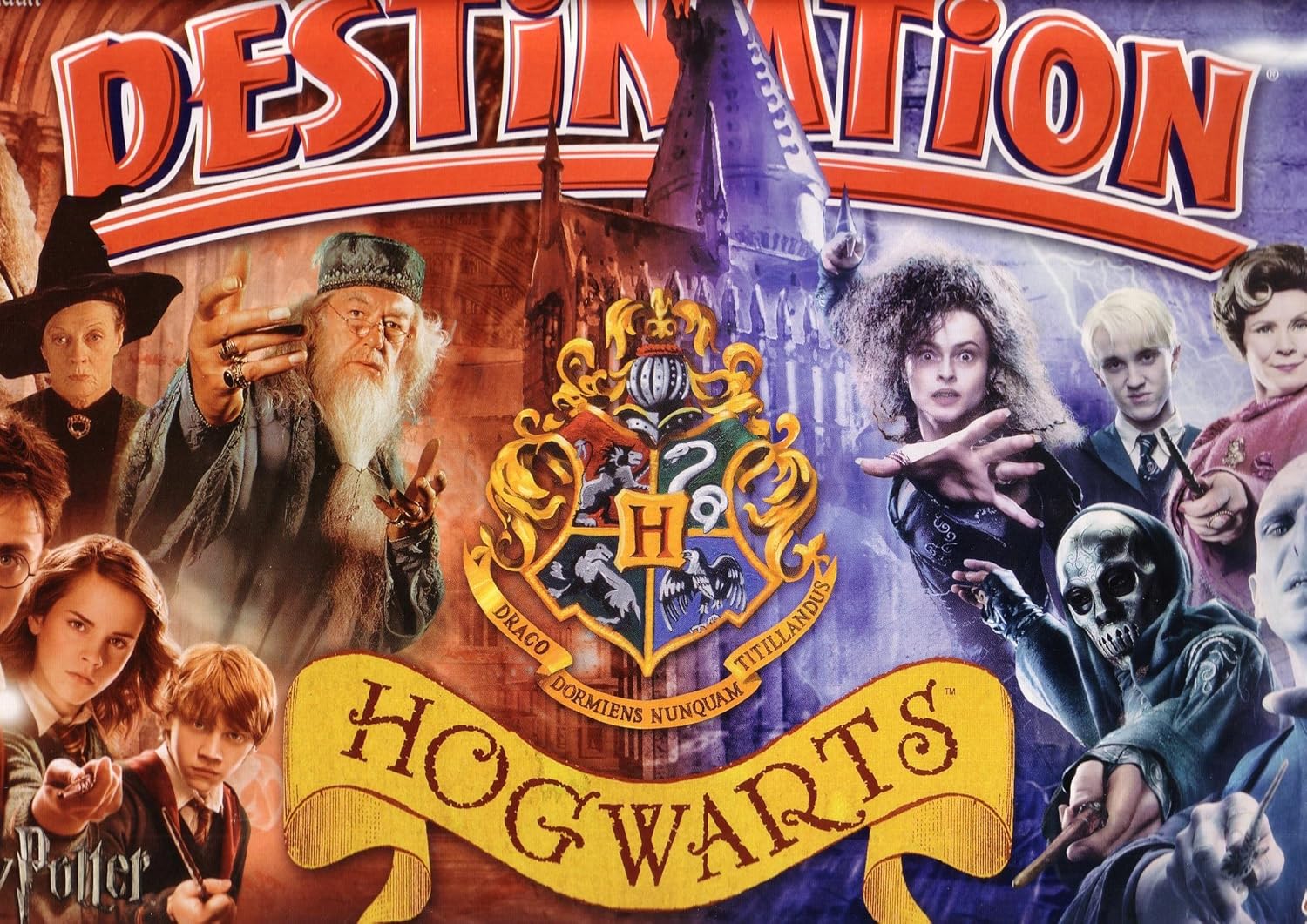
The first game is Destination Hogwarts which is the fast moving game. This Harry Potter game takes you through Hogwarts school of witchcraft and wizardry and the grounds surrounding it.
You play as a student and visit the famous destinations in the world of Harry potter, while collecting house points and avoiding hazards as you progress through the game. If you don't earn the house points you will be expelled, so plan your route through Hogwarts without losing points. make sure to watch out for other players though because If they land on one of your destinations you can knock them back to start.


This game is appropriate age for this game is 8 +. The game contains 600 questions based on the Films, some questions easy some extremely hard that even the best fans would struggle to answer, test yourself on :The dark arts, Hogwarts, Magical spells and potions,and many more topics.


6+
This game is like cluedo but know one dies and you need to solve the mystery.


Target: PG

Hop aboard the Hogwarts Express and test your knowledge of one of the world’s most famous wizards with real film clips, puzzlers and questions based on the Harry Potter movies (including Harry Potter and the Goblet of Fire). How much do you really know about Quidditch and Quaffles, Transfiguration or the Dark Arts? You’ll find out as you race your friends around the board.




Risk assessment -Trip to the farm(health and safety)

In this session we had to do a risk assessment on  what risks could happen on the way to  the farm and in the farm.

What could happen on the way to the farm

  • Drop camera in a puddle
  • Get attacked by a pigeon (it happens)
  • get hit by a car
  • slip on the wet surfaces
  • could get lost

What could happen at the farm.

  • Animals could bit/ kick you
  • Germs 
  • slippery surfaces
  • drop camera/ tread in animal poop 
  • weather/ rain could damage the camera
Mitigate= How to avert a crisis 


How to counteract these problems.
Keep camera around neck and put a protective cover on it, Make sure to cross a crossings if possible if not look both ways, watch your footing so you don't slip, stick in groups so you won't get lost, 

Friday, 22 January 2016

Farm research


http://www.stonebridgecityfarm.com/

      What editing techniques do you intend to use?

 The animals at the farm are at the moment  
  • Anglo-Nubian Goat, 
  • Dexter Cows,  
  • Shetland Pony.  
  • Angora Goats,  
  • Golden Guernsey Goat,  
  • Jacobs Sheep and their offspring,
  •  rabbits, 
  • guinea-pigs, 
  • chickens,
  •  geese,
  •  ducks
  •   turkeys,
  • cockatiels,
  •  a Rosella parrot,
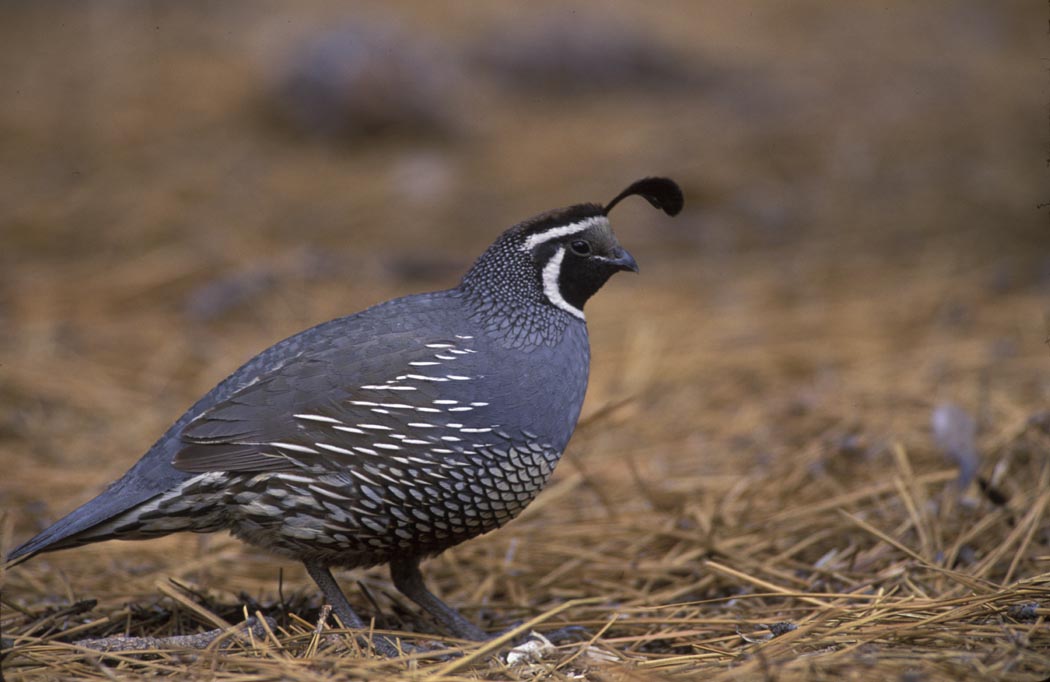
  •  quails,
  •  finches, 
  • and budgerigars.

The animals that I would specifically focus on The Golden Guernsey Goat, Jacob Sheep,Guinea-pigs, Rosella parrot, quails and finches. The considerations that I will be making are the ISO, Shutter speed,aperture and white balance.
  •     ISO: If the weather is good then I would use an ISO of 100-200. If the weather was overcast or raining I would use an ISO of 400-800.
  •     Shutter speed: The minimum That I would use on animals If they where stationary 1/100's. But if it was moving I would use 1/200's.
  •     Aperture: A large aperture will focus on the animal and blur out the background so when it comes to editing it later it will help cut the animal out because It won't be huge blocks of color that will blend with the animal.
  •    White balance: Compensates for the light in the area whether it be natural or artificial and balance out the lighting.
    If I wanted to focus on the depth of field I would focus on the aperture and  If I wanted to focus on the animals while there moving I would have s a quicker shutter speed.
    
   The editing Technique's I would use are the levels and curves which alter the lighting levels to help make the image brighter or darker depending on what you want the lighting to look like. Crop so I can crop unnecessary bits in the background. Cut tool so I can cut the animal out if I only want the animal on it's own with no background.


Image result for Jacobs Sheep


Harry Potter research task

1.Identify the shot type and angle? (low-angle,birds eye,shallow depth etc (http://www.slideshare.net/cassum/shot-types-and-camera-angles)
2. Describe the subject matter (what is it)
3.Describe the lighting that may have been used
4.Describe the mood/ emotion.
5. what are the key point(s) of interest?
6. what actions has been captured? (if applicable)


All photos show I took personally while on a trip to harry potter studios London
Backgrounds.


Mid shot


Creatures 
 mid shot.
 Close up
 Close up/ full frame


Mid shot
close up


Contact sheets


Friday, 15 January 2016

Memory Check 1

1. The Rule of Thirds refers to:

a)      A rule that specifies the focal length differential in calculating depth of field.
b)      A compositional rule that divides a shot into vertical and horizontal thirds.
c)      A compositional rule that refers to certain times of the day for better results.
d)     The rule that says your third shot will always be the most stable of three shot in rapid succession

2. In order to maintain consistent exposure, (while all else remains the same), what happens between shutter speed and aperture?

a)      As the aperture widens, a slower shutter speed is required.
b)      As the aperture widens, a faster shutter speed is required.
c)      There is no relation between aperture and shutter speed.
d)     None of the above.

3. The best way to reduce camera shake is to:

a)      Increase your ISO
b)      Decrease your shutter speed
c)      Use a tripod
d)     Increase (open) your aperture wider.

4. What color space should images be saved in if their intended output is a web gallery?

a)      Adobe RGB
b)      ProPhoto RGB
c)      sRGB
d)     LAB

5. What are the "Golden Hours"?

a)      The hours where you can charge the most for your time.
b)      The hour before sunrise and after sunset.
c)      The hour after sunrise and before sunset
d)     The hour when the sun is at its peak

6. When shooting landscapes, the best type of lens to use would be:

a)      wide angle lens
b)      telephoto lens
c)      macro lens
d)     supertelephoto lens

7. Depth of field refers to.

a)      the range of sharpness from near to far
b)      the closest point in the image that is sharp
c)      the furthest point of the image that is sharp

d)     the background portions of an image that are sharp